
Your otoscope was invented in 1850. This wasn't.
The OtoSight™ Middle Ear Scope scans through the eardrum and tells your providers whether fluid is there, what type it is, and how dense it is, all in seconds.
Add a billable procedure to your practice, and watch the favorable reimbursement follow.
Learn How OtoSight Can Work For Your Practice
Get the info packet and talk to our team who can walk you through exactly what makes OtoSight so revolutionary.
The published record
Give your providers 90.6% accuracy on middle ear fluid instead of the 50% they get from a standard otoscope.
Not a claim we're making about your practice. Peer-reviewed figures, cited below, that you can hand to your medical director.
Accuracy of the technology in the OtoSight Middle Ear Scope when assessing middle ear effusion.
1. Otolaryngol Head Neck Surg. 2020 Mar;162(3):367–374.
Nationwide diagnostic accuracy rate with standard otoscopy: a light and a magnifying glass pointed at a closed eardrum.
2. Arch Pediatr Adolesc Med. 2001;155(10):1137–1142.
A large randomized controlled trial found OtoSight demonstrated more accurate diagnosis of pediatric ear infections.
3. PhotoniCare announcement, May 19, 2025.
Certified quality management, AdvaMed Code of Ethics certified, and FDA-cleared for clinical use.
4. PhotoniCare, Inc. Certification details available on request.
What providers say
Don't just take our word for it.
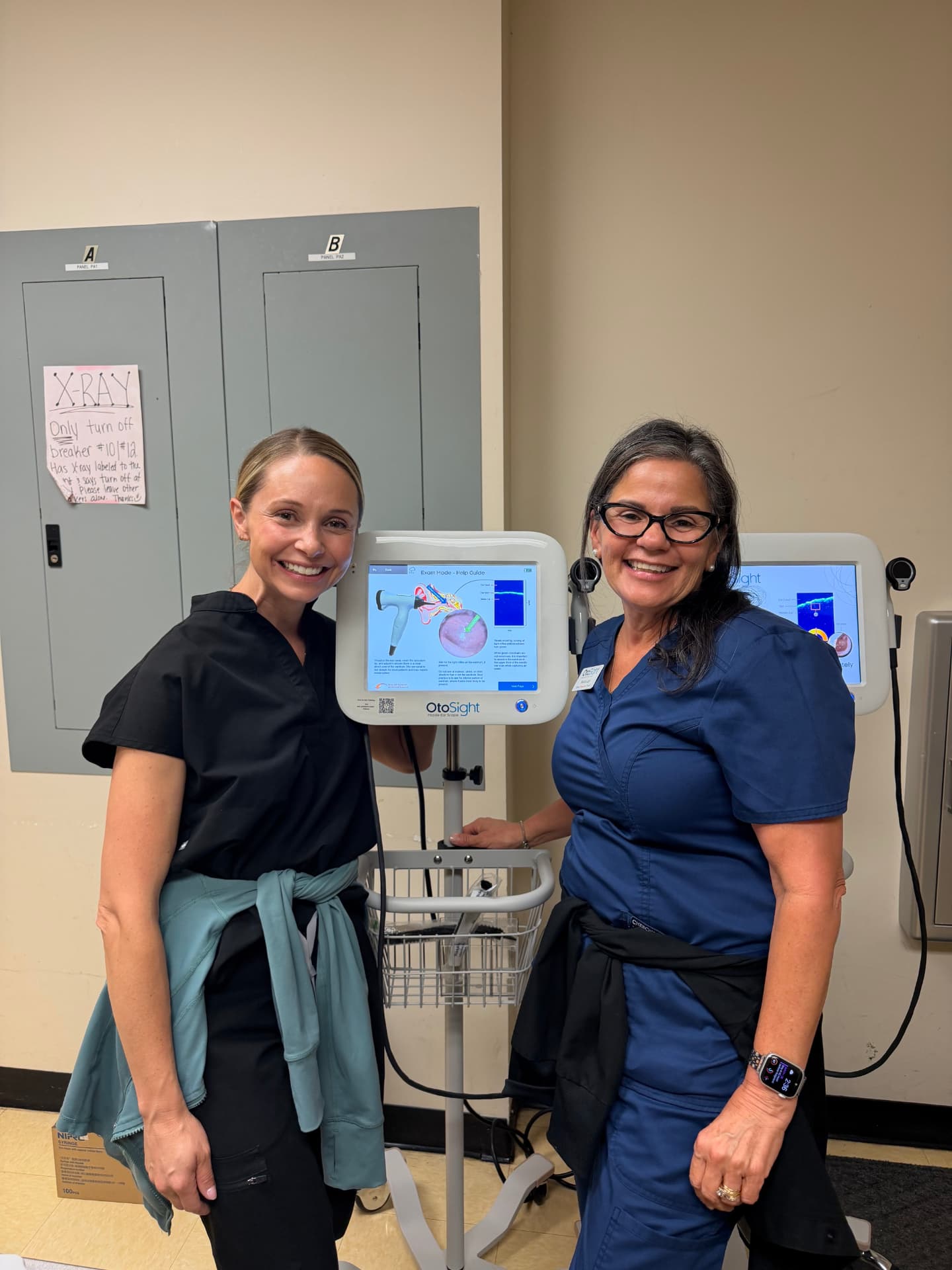
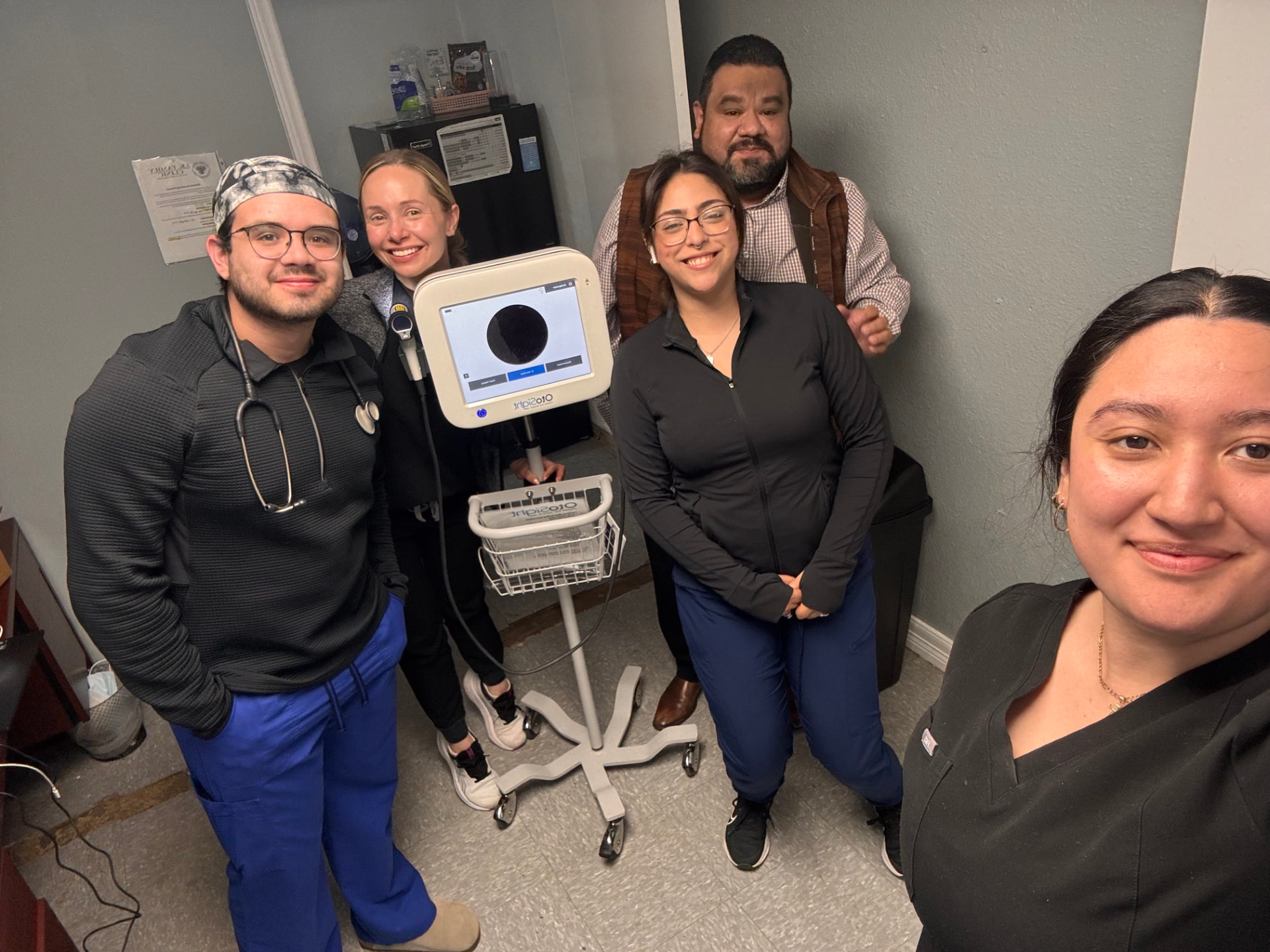
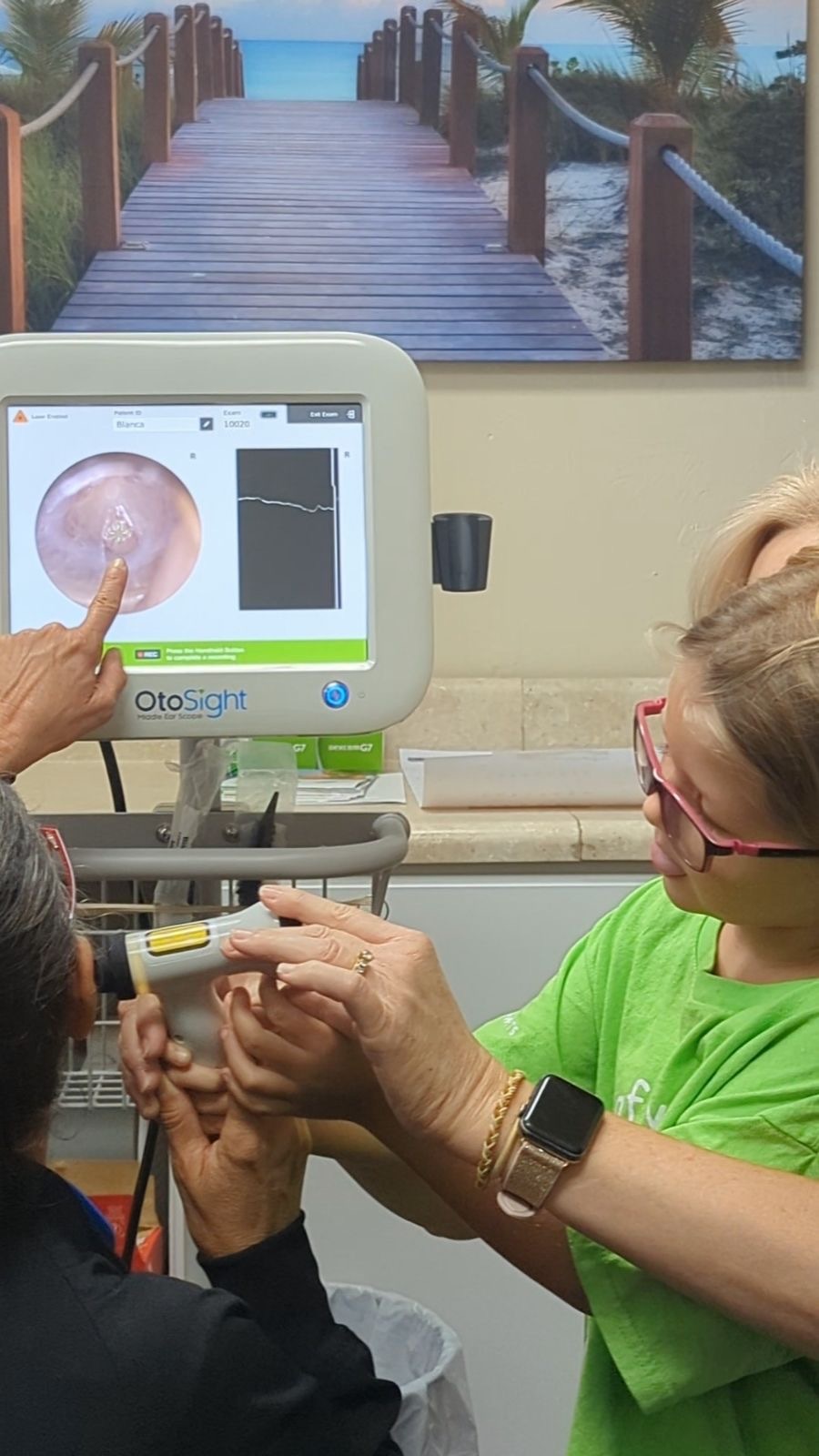
In practices today
OtoSight in the exam room.
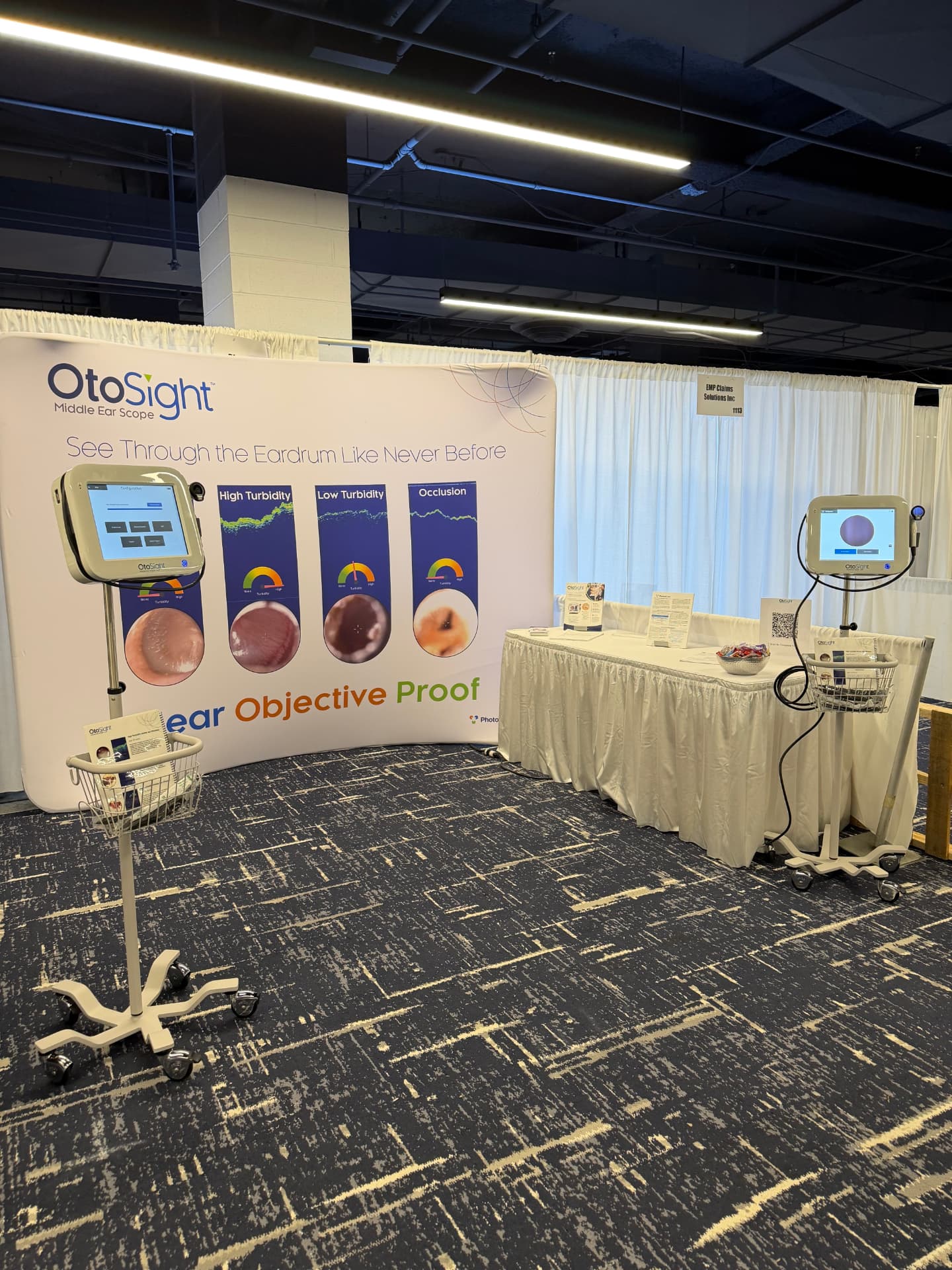
For the practice, not just the provider
The ear exam your practice does 20 times a day just got better.
It's the most repeated exam in the building, and the one with the least objective information behind it. Here's what changes when that stops being true.
Results in seconds, inside the visit
The scan is captured about as quickly as standard otoscopy, so it drops into the exam you already run rather than adding a step to it.
Techs can scan. Doctors just read the results.
Any trained staff member can perform the scan, so the physician only has to read the objective findings.
Wax stops being a dead end
The middle ear scan reads through significant cerumen, so the exams that used to end in "we'll need to clean this out and have you come back" don't have to.
A conversation the parent can see
When a parent arrives expecting a prescription, you have something on the screen to point at. The visit ends with agreement instead of negotiation.
Questions practices ask before the call
How long does it take a provider to learn?
The handheld is designed to feel like a traditional otoscope, and the capture is comparable to standard otoscopy. Any healthcare provider in the practice can use the device, since it's built so clinical staff aren't dependent on one trained person being in the building.
Can it read an ear that's full of wax?
Yes. The middle ear scan determines the presence or absence of fluid, characterizes the type, and visualizes its density even in the presence of significant wax.
Is it FDA-cleared?
Yes. The OtoSight Middle Ear Scope is FDA-cleared. PhotoniCare also holds ISO 13485:2016 certification and is certified to the AdvaMed Code of Ethics.
Does insurance cover it?
OtoSight can be billed with two Category III CPT codes, 0485T and 0486T. Category III codes are reimbursed at the discretion of individual payers, which is why PhotoniCare provides a dedicated reimbursement team to train on appropriate coding and support appeals of denied claims. The 2025 coding sheet can be provided.